


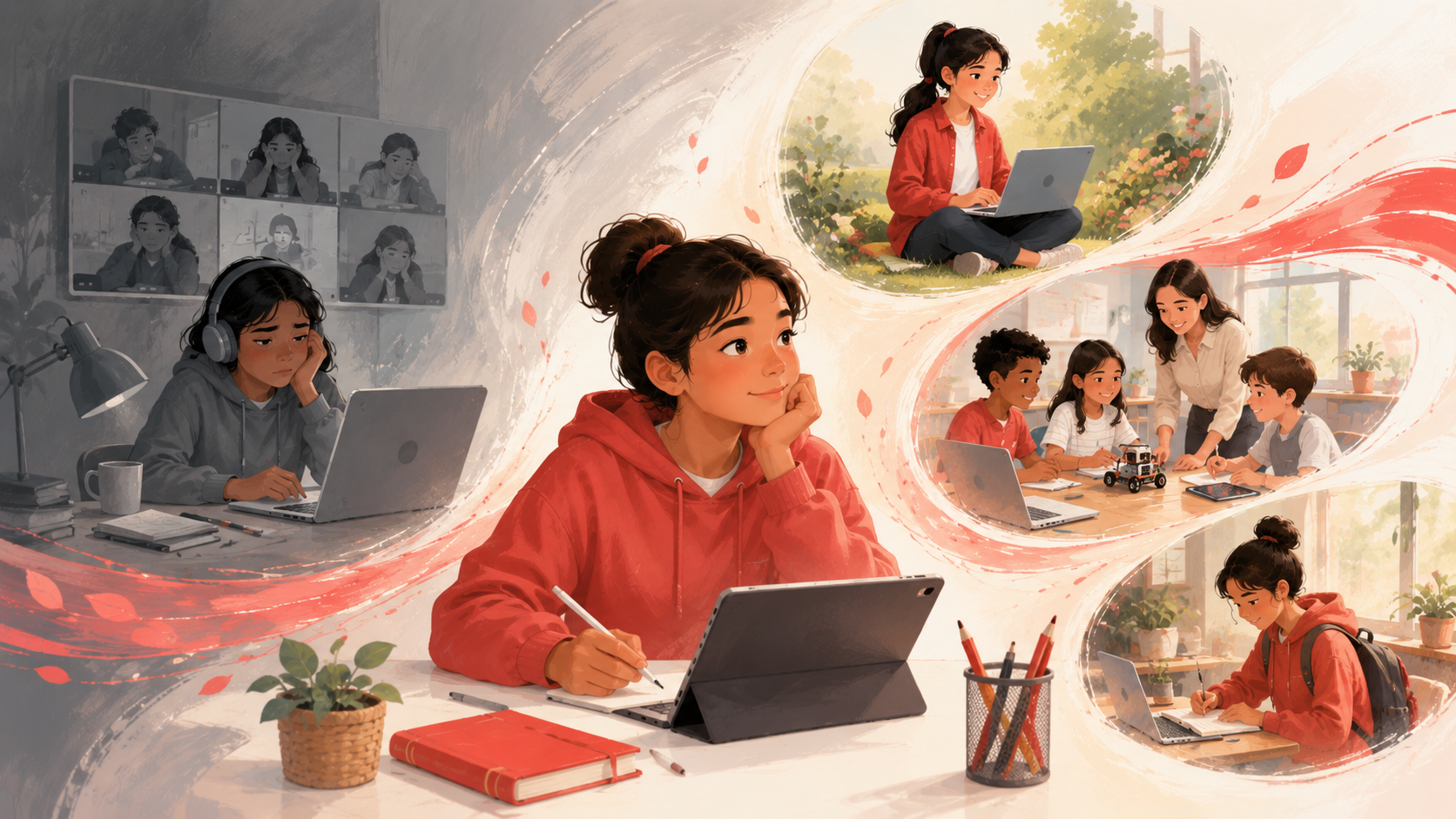
When the pandemic first hit, none of us expected that education would shift so dramatically, so quickly. Overnight, classrooms turned into screens, teachers became digital hosts, and students tried their best to learn from the corners of their homes. Remember those early days of video classes where everyone struggled with audio issues, camera angles, and the constant “Can you hear me?” loop? It was new, exhausting, and for many, the birth of something we now call Zoom fatigue.
But beyond the exhaustion, something else was quietly happening: students were discovering new ways of learning.
Surprisingly, yes. What started as a chaotic emergency pivot slowly grew into a long-term transformation. For example, one overview of “hybrid teaching after Covid-19” found that a majority of students reported an enhancement in their ability to learn when instruction blended online and in-person formats.
Take a real-time story of Aarav, a Grade 9 student from Bengaluru. Before the pandemic, Aarav struggled to keep up in traditional classrooms. He was shy and rarely raised his hand, even when he needed help. But when classes moved online, everything changed. He could revisit recorded lessons, submit questions privately, and learn without feeling judged. For the first time, he felt in control of his learning.
His mother once shared, “He wasn’t lost anymore. He actually looked forward to classes because he didn’t feel pressured.”
This is a side of online learning that often goes unnoticed. For many learners like Aarav, it wasn’t a setback. It was a turning point.
As schools reopened, students, teachers, and parents quickly realized that despite the challenges, online learning offered something powerful: flexibility and personalization that traditional schooling rarely allowed. Many learners reported improved comprehension when online and in-person formats were blended.
If students could learn effectively from home, then why should education return to a rigid one-size-fits-all structure?
Live Webinar cited that up to 82% of students prefer a hybrid learning environment rather than fully traditional schooling. And a global education-study site noted that in the 2020-21 school year, only ~25.6% of higher-education students were enrolled exclusively in distance courses, down from ~45.8% during the height of the pandemic.

This suggests a move back toward less fully online models, but not a full return to just brick-and-mortar.
Hybrid it is. And that’s when hybrid schooling stepped in, not as a backup plan, but truly as a balanced solution. Instead of spending entire days glued to a screen, students began blending in-person classes with online lessons. This mix reduces digital overload, brought back human interaction, and allowed learners to engage both academically and personally at a healthier pace.
Teachers, too, found new tools that made learning more adaptive. Digital assessments, recorded lessons, interactive platforms, and real-time feedback helped them identify what students needed faster.
How do we take the digital skills students and teachers have gained and merge them with traditional learning strengths to build a more adaptable and supportive learning experience?
To answer this question, we need to look at how students and teachers adapted during the shift to online learning. Students learned to manage their own schedules, navigate digital platforms, and take responsibility in ways they hadn’t before. Teachers explored new tools, new methods, and new ways to reach every learner. What began as unfamiliar became a source of confidence and independence.
This emotional shift is at the core of what makes hybrid learning powerful. It blends the flexibility students found online with the connection and structure they missed from the classroom.
This is where The World Ecademy gets online learning right.
Let’s be honest, long Zoom classes can be exhausting for children. Constant screen time, awkward online interactions, and the pressure of being “on camera” all the time can quickly drain their energy. TWE understands this and designs learning to work with children, not against them.
As a fully online homeschool, The World Ecademy keeps things balanced. Every 50-minute class is followed by a 10-minute break, giving students time to move, reset, and return refreshed. Teachers actively encourage movement between sessions, and daily school hours are kept age-appropriate, from 1.5 hours for younger learners to up to 5 hours for older students.
Teachers use digital tools to better understand each child and support them personally. Those who need more time get it. Those ready to move ahead are encouraged. Children feel seen, not stressed.
At TWE, technology isn’t the focus. The child is.
And that’s what makes online schooling feel calmer, more human, and more effective.